


Cop Who Took Out DIMEBAG's Killer Has No Regrets About His Involvement, Even Though Incident Ended His Career
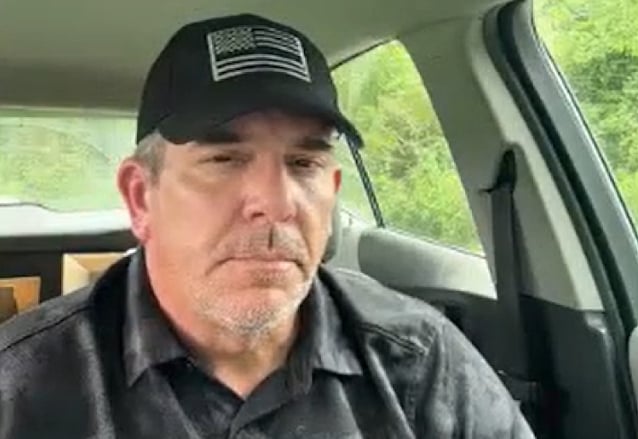
August 29, 2026In a new interview with Bill Bailey of Today's Boondoggle Podcast, James Niggemeyer, the former Columbus, Ohio police officer who is widely credited for saving lives in December 2004 when he entered a local nightclub without backup and killed a crazed gunman responsible for blowing away four people, including PANTERA/DAMAGEPLAN guitarist "Dimebag" Darrell Abbott, reflected on the incident that ended his career, largely because of the emotional toll of that night. He remained on patrol for three years after Dimebag's murder, but the city eventually decided, with the advice of doctors, that he shouldn't be a first responder. He was transferred to the robbery section as a detective.
Niggemeyer said (as transcribed by BLABBERMOUTH.NET): "When that call went out as a active shooter at the Alrosa Villa [nightclub in Columbus], I had happened to already have left the substation. That call went out about a little before 10:15 p.m. I worked 10 [p.m.] to 6 [a.m.], so we always have roll call at 10:00 o'clock, and then we go out to pack up our cruisers and head out. Well, my district in that precinct was the farthest from the substation, so I usually tried to get going early 'cause I had the longest drive. So I was the first one out of the substation that day, when that call went out. But I carried a Remington 870 shotgun across my cruiser here. I was one of only two cruisers that carried it because my district was more rural, so we had deer-versus-car accidents — you had to put deer down and things — where the districts that were more in the city didn't need them. Well, the Remington 870 was the same shotgun that I hunted with since I was 12 years old. I knew that gun inside and out. So a lot of people ask me, 'Why'd you use a shotgun instead of your pistol?' Well, one, I'm more familiar with the shotgun, and two, I'm better shot with the shotgun. So that's a question I get asked a lot."
James continued: "When I got [to Alrosa Villa] and was the only officer there, there were fans telling me where to go. I'd never been in the Alrosa in my life, so I wasn't familiar with the layout. But when I entered the back door, where they had told me to go, and I saw the hostage in there, or the suspect in there holding a hostage. We didn't know he was holding a hostage. That had not come out on the radio. And he still had the gun and was waving it around and things like that. So I went ahead and snuck in at that point. But between hunting my whole life and military and police training, it was just a culmination of everything I had been through in my life. And you hear the words 'tunnel vision', but it was true — I had true tunnel vision. Literally, everything was black except for the suspect and the hostage. It was a true tunnel vision. I literally didn't hear or see anything else. I can't even tell you what people were screaming. So, I think it was just everything together. Training — in the police department, we had just done active shooter training a couple of months prior. Of course, the active shooter training we had did, we had did it with groups of four, not on our own. But I don't know if the situation would've been different had he not been holding a hostage. But because he was holding a hostage and he had the hostage in a headlock, I just felt like I couldn't sit and wait on backup. So, yeah, it was just a lifetime culmination. And I knew that weapon really well and what it was capable of doing."
Asked by Baileywhen he found out the identity of the musician who was killed that night and whether he was already aware of Dimebag's impact on the music world, James said: "Well, it wasn't till after [that I found out], because, like I said, we had just left roll calls and I had never been [at the Alrosa Villa]. I didn't know who was playing. I mean, we have several different venues around Columbus, so there's always somebody playing in some venue. So at the time, I had no clue who was playing in that venue. Of course I had heard of PANTERA. I get asked quite a bit if I was a fan. I grew up in the country. I was more of a country music fan, more what my family listened to — my dad, my grandparents — and more classic rock, I call it, which would be your AC/DCs and SCORPIONS and FOREIGNERs and then more music in the '80s and '90s-type rock. So I was never a metal fan, but I had heard of PANTERA, METALLICA, things of that nature. But when it was all over with, an officer took my gun from me for evidence, and then I was escorted into a cruiser and then I was actually driven away from the scene. So I probably wasn't on the scene for more than two minutes after it was over with. And it wasn't until probably, I'd say maybe a half hour after the incident to when I found out who was shot that night. It was just through radio chatter that I had heard it. And then, of course we all had cell phones and things, and it was breaking news worldwide. So, yeah, no clue until maybe a half hour after."
Regarding how his life has changed in the two decades since the incident, James said: "Well, I tell you what, what I like to tell a lot of people, I'd seen some things in the military. I had, unfortunately, seen, when we were at NTC training for the Middle East, I had seen a tank run over a Humvee and unfortunately crush the driver. But I wasn't directly involved. It was from a distance. In the police department, I had gone on many a scenes where either somebody was shot or killed or suicide or car wreck, things of those nature, I'd seen all this, but never directly involved. This was the first time that — ending a person's life, you don't know how it's gonna affect you. Everybody can tell you whatever they wanna tell you, but there's very select few people that have ever been involved in something like that, whether they were in combat or police. But I was hospitalized for panic attacks. That was the thing that got me the most, was the panic attacks, and then the constant nightmares. It really took me a long time that my brain just wouldn't shut down. And doctors and everybody tried a lot of different things to try to get it… I'd just be here on a normal day, like talking to you, and I'd just go into a full-blown panic attack, and I couldn't breathe. So, it affected me mentally, but that also affected me physically, to the point where the department retired me medically because of it. So, yeah, it ended my career, something that I did, everybody tells me extremely well, ended up ending my career. But I don't regret it for a minute. I'm glad I was able to stop him before a lot more people were hurt. But it certainly didn't... It kind of set my life on a spiral. But that's part of the job. You sign up for it. You just have to deal with it, I guess."
A little after 10:00 p.m. on December 8, 2004, 911 operators began receiving multiple panic-stricken calls from the Columbus nightclub Alrosa Villa. During a DAMAGEPLAN concert, a man had rushed the stage and fired shots at the band. In moments, seven people were wounded, four fatally.
Officer Niggemeyer, patrolling just blocks away, was the first officer to arrive on the scene, less than three minutes after the first 911 call was received. Niggemeyer entered the building through the rear; five more officers arrived momentarily and entered through side doors. Dead and wounded citizens lay on the floor, shots were still being fired, and several hundred people were trying to escape.
Despite the chaos, Officer Niggemeyer was able to spot the gunman quickly, near the rear of the stage. Retreating from the other officers, the suspect had grabbed a hostage, immobilized him in a headlock, and was holding a gun against the man's temple. Positioning himself about 20 feet from the suspect, Niggemeyer, armed with a 12 gauge Remington 870, was able to get off one well-placed shot, killing the gunman instantly and ending the carnage. The gunman still had 35 rounds of ammunition when Niggemeyer shot him.
"I remember I was leaving my substation, which is about two miles from the club, when a call came in as a '43 at the Alrosa' — which is police code for a shooting," Niggemeyer told MTV in 2005. "Then, additional calls were coming in about what the suspect was wearing and more shots fired. I was on my way there, so I was the first to arrive on the scene.
"There was a group of people standing by the back door and they called me over to come that way as other officers were arriving on the scene.
"There's no doubt in my mind that [Gale] didn't know I was there," Niggemeyer added. "From where I was, I could see he was focused on the other officers coming in the front.
"I was still hoping maybe he'd let the hostage go and retreat. I was just trying to get as close as I could to assess the situation and hoping he'd [release] the hostage so I wouldn't have to shoot. But then, while he was waving the gun around, he took it and stuck it to the hostage's head … which changed the whole situation, if he was going to possibly execute the hostage. They never mentioned a hostage on the radio calls. I knew at that point he wasn't going to let this guy go, and [might] do something to him.
"I knew from that distance I could shoot the suspect, as long as I aimed high enough and wouldn't hurt the hostage," he said. "At that point, almost immediately, I fired."
Niggemeyer later said that he'd gotten a lot of supportive e-mails from PANTERA's fans, as well as a letter from Gale's mother.
"She wrote me a few weeks after and told me she understood that I was just doing my job," he said. "And she didn't have any ill will toward me."


 Prev
Prev 